
Developing a Managerial Mindset During MBA CET Preparation
Focus: Decision-making, prioritization, risk vs reward thinking
Introduction: MBA CET Is More Than a Knowledge Test
Most students prepare for MBA CET as if it is only about syllabus completion and speed. They focus heavily on concepts, formulas, and shortcuts. While these are important, they are not sufficient.
MBA CET, at its core, tests something deeper:
How well you make decisions under pressure.
Every CET paper rewards aspirants who can:
- Prioritize correctly
- Choose questions wisely
- Balance speed with accuracy
- Take calculated risks
These are not just exam skills — they are managerial skills. Developing this managerial mindset during preparation can significantly improve CET performance.
What Is a “Managerial Mindset” in MBA CET Preparation?
A managerial mindset means thinking like a decision-maker, not just a problem-solver.
Instead of asking:
“Can I solve this question?”
You ask:
“Should I solve this question right now?”
It involves:
- Strategic thinking
- Resource allocation (time & energy)
- Risk vs reward evaluation
- Outcome-focused decisions
MBA CET rewards smart choices, not emotional or impulsive attempts.
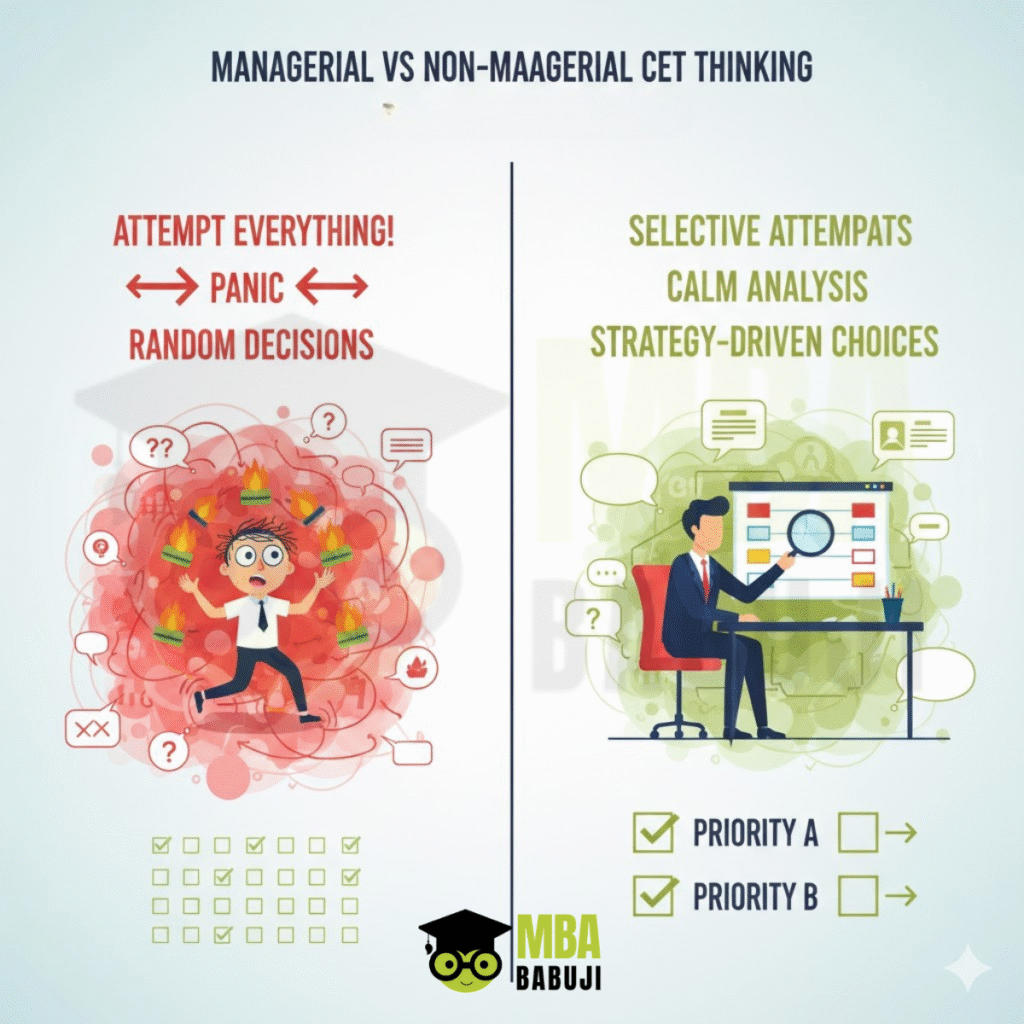
Why CET Specifically Rewards Managerial Thinking
Unlike some exams, MBA CET is:
- Speed-intensive
- Highly competitive
- Unforgiving of poor decisions
You cannot attempt everything.
You cannot solve all questions perfectly.
Your score depends on:
- What you choose to attempt
- What you choose to skip
- How you manage limited time
This mirrors real-world management more than textbook learning.
Decision-Making: The Most Underrated CET Skill
Every CET paper involves hundreds of micro-decisions:
- Attempt now or later?
- Spend more time or move on?
- Guess or skip?
Common Non-Managerial Decisions
- Attempting tough questions just because they look familiar
- Chasing ego satisfaction instead of score
- Panicking after seeing difficult questions
Managerial Decisions Look Like:
- Selecting high-confidence questions first
- Avoiding emotional attachment to questions
- Accepting that skipping is a smart decision
Good managers don’t solve every problem — they choose the right problems.
Prioritization: Doing the Right Questions First
Prioritization is not about doing more.
It is about doing what matters most.
In CET, This Means:
- Identifying easy and moderate questions quickly
- Avoiding time-heavy questions early
- Focusing on accuracy-driven attempts
Productive Prioritization Strategy:
- First round: High confidence, low time questions
- Second round: Moderate difficulty, good ROI
- Last round: Calculated risks (only if time allows)
Aspirants who fail often reverse this order.
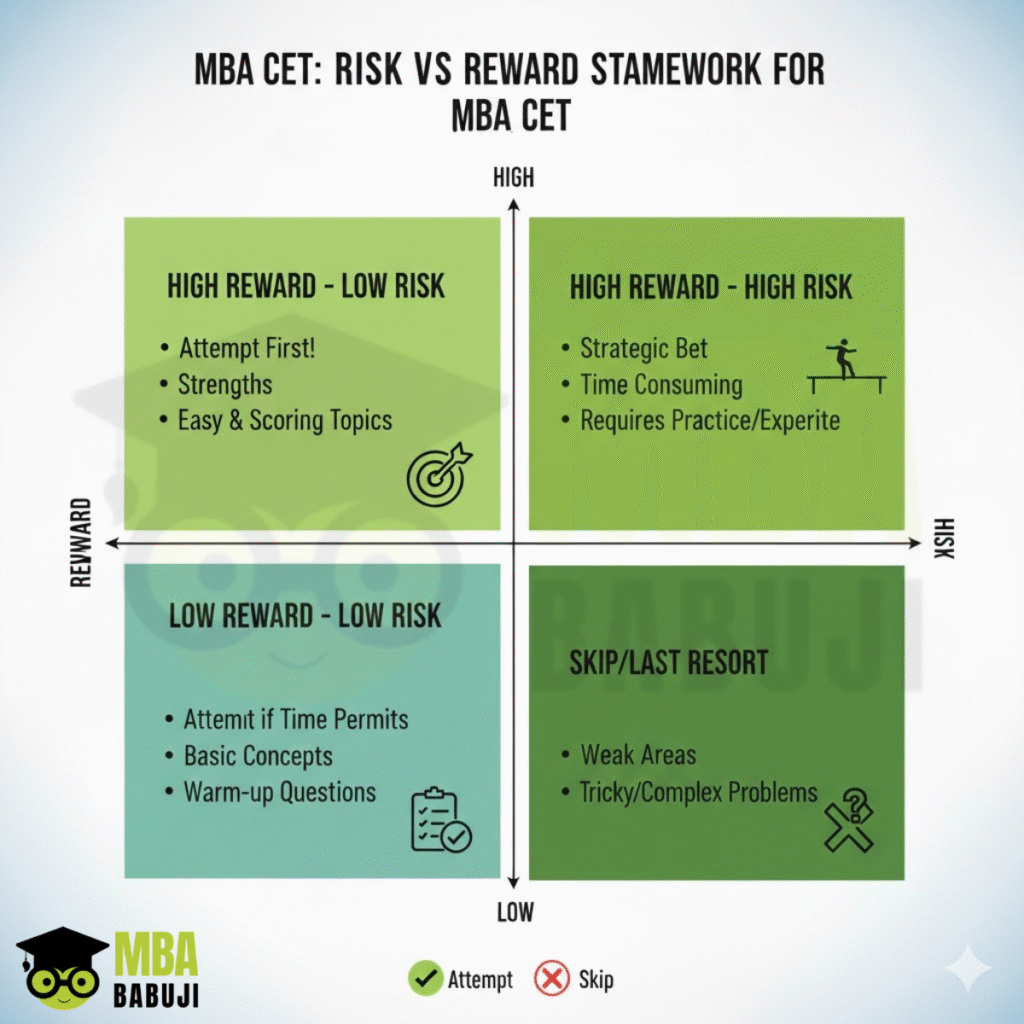
Risk vs Reward Thinking in CET Preparation
Every question in CET carries both risk and reward.
Poor Risk Management Looks Like:
- Blind guessing under pressure
- Over-attempting to “increase attempts.”
- Ignoringthe negative marking impact
Smart Risk Management Looks Like:
- Attempting only when elimination gives an advantage
- Leaving questions with low confidence
- Preserving accuracy over attempt count
Managers don’t avoid risk — they manage it. CET expects the same.
How Daily Preparation Shapes Your Managerial Mindset
Mindset is not built on exam day.
It is built daily during preparation.
Non-Managerial Prep Habits:
- Random question solving
- No analysis after practice
- Studying based on mood
Managerial Prep Habits:
- Goal-based study sessions
- Reviewing mistakes systematically
- Tracking accuracy and time
- Adjusting strategy weekly
Your preparation style directly reflects how you will behave in the exam.
Mock Tests: The Best Place to Practice Managerial Thinking
Mocks are not just score tests.
They are decision-making simulations.
Use Mocks to Practice:
- Question selection discipline
- Time allocation
- Skipping without regret
- Staying calm after mistakes
After every mock, ask:
- Where did I waste time?
- Which decisions hurt my score?
- Which skips helped me?
This reflection builds managerial maturity.
How Toppers Think Like Managers During CET
Top CET performers:
- Accept imperfection
- Focus on score, not ego
- Stay unemotional
- Stick to pre-decided strategy
They don’t chase every question.
They control the paper, not the other way around.
How to Start Developing a Managerial Mindset (Practical Steps)
1. Add “Why” to Every Attempt
Ask why you attempted or skipped a question.
2. Track Decision Errors
Maintain a log of:
- Wrong decisions
- Time misallocation
- Risk misjudgment
3. Practice Selective Solving
Intentionally skip questions during practice to build discipline.
4. Review Strategy, Not Just Answers
Focus on decision quality, not just correctness.

Conclusion: CET Is Your First Management Test
MBA CET preparation is not just about entering a business school.
It is about thinking like a future manager.
Those who learn to:
- Decide calmly
- Prioritize wisely
- Manage risk logically
naturally score better.
Develop this mindset early, and CET becomes less stressful — and more controllable.
FAQs
1. What is a managerial mindset in MBA CET preparation?
It means making strategic decisions about question selection, time management, and risk instead of attempting everything emotionally.
2. How does prioritization help in MBA CET?
It ensures you solve high-ROI questions first, improving accuracy and score stability.
3. Is skipping questions a good strategy in CET?
Yes. Smart skipping is a key managerial skill and often improves overall score.
4. How can I practice managerial thinking before the exam?
Through mock tests, error analysis, decision tracking, and disciplined practice routines.