
Why Smart Students Still Miss MBA Cut-Offs
Introduction: Intelligence Is Not the Problem
Every year, the same confusion repeats itself.
Students who were good in academics, strong in concepts, and confident in preparation still miss MBA cut-offs in exams like CAT, XAT, CET, NMAT, and SNAP. Meanwhile, some average-looking profiles quietly cross the line.
This creates a dangerous myth — “MBA exams are unfair” or “luck matters more than ability.”
The reality is simpler and more uncomfortable.
MBA entrance exams do not measure intelligence.
They measure decision-making under pressure.
Being smart helps. But being smart in the wrong way can actually push you below the cut-off.
Intelligence vs Exam Intelligence

Most smart students prepare well.
They understand concepts.
They solve difficult questions in practice.
They can explain logic clearly outside the exam hall.
But MBA exams don’t reward knowledge depth.
They reward judgment.
Knowing vs Applying
Knowing a concept means:
- You can solve it with time
- You feel confident attempting it
Applying it in an exam means:
- You decide whether it is worth attempting
- You assess risk in seconds
- You accept skipping without ego
MBA exams reward selection, not completeness.
Trying to solve everything is not intelligence here — it’s poor judgment.
Where Smart Students Go Wrong
Smart students don’t fail because they don’t know enough.
They fail because they make avoidable exam decisions.
1. Overattempting Due to Confidence
“I can do this” becomes “I should do this.”
Smart students often attempt extra questions, assuming partial progress will help. In reality, one wrong answer can erase multiple correct ones.
Confidence turns into overreach.
2. Forcing Questions Instead of Skipping
MBA exams punish force.
Smart students hate leaving questions. Skipping feels like weakness. But in these exams, skipping is strategy, not surrender.
Forcing a question wastes:
- Time
- Accuracy
- Mental calm
3. Ignoring Opportunity Cost
Every extra minute spent on a tough question is a minute not spent on an easy one.
Smart students often ignore this invisible cost because they believe effort must convert into marks.
In MBA exams, effort often converts into loss.
4. Rushing Easy Questions
Ironically, strong students lose marks on easy questions.
Why?
- They assume they can’t make silly mistakes
- They move fast to “save time”
- They don’t recheck basics
One careless error hurts more than skipping a tough question.
5. Treating Mocks Casually
Many smart students use mocks only for score checking.
They don’t analyze:
- Why did they attempt a question
- Whether the decision itself was wrong
- Which mistakes were repeatable
Mocks are not practice tests.
They are decision labs.
Ignoring this keeps the same mistakes alive on exam day.
How Cut-Offs Are Actually Missed

Cut-offs are not missed by big failures.
They are missed by small wrong calls.
The Percentile Reality (Without Math)
In competitive exams:
- Everyone knows something
- Small differences create big rank gaps
One wrong attempt:
- Cancels correct answers
- Drops accuracy
- Consumes time
- Pushes you below the line
Two bad decisions can undo ten good ones.
This is why students feel:
“I did so much right, still missed the cut-off.”
Because the exam doesn’t count effort — it counts net outcome.
What Toppers Do Differently
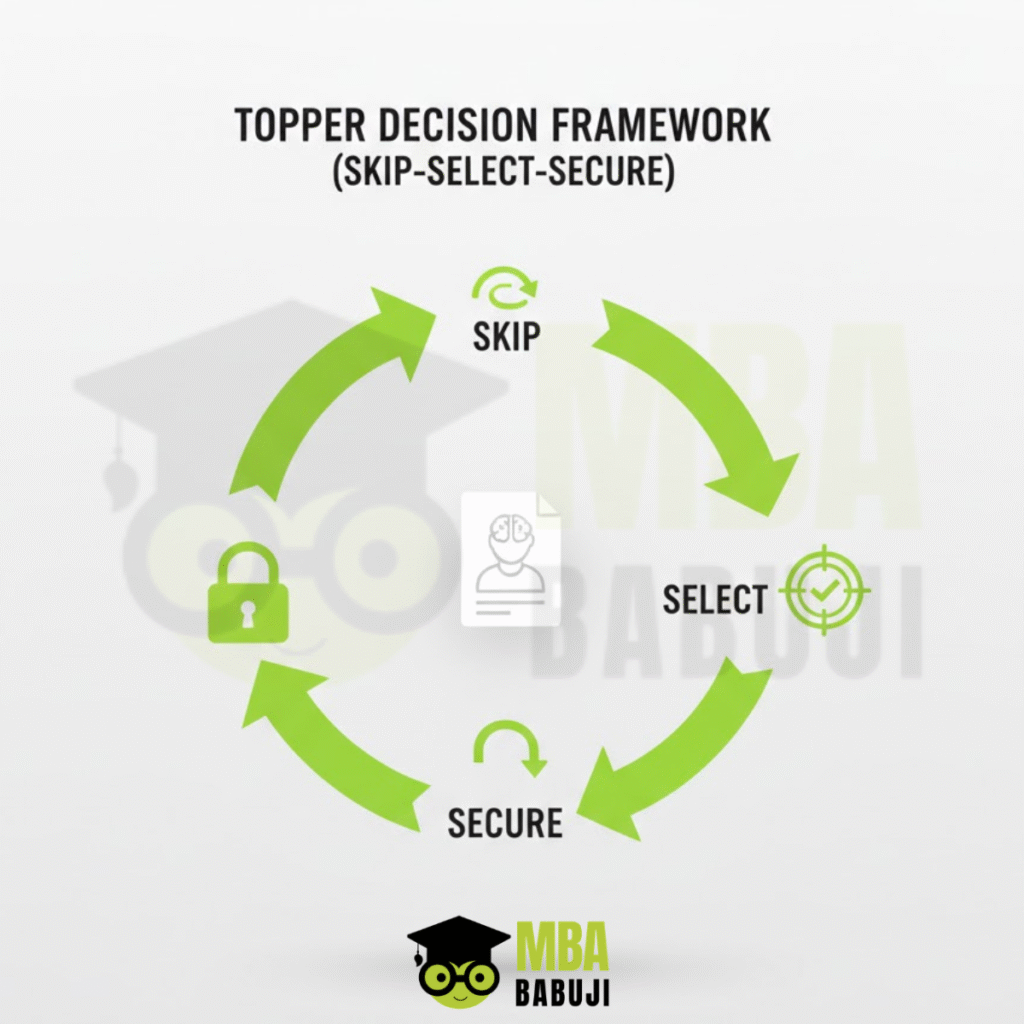
Toppers are not flawless.
They just protect their score better.
1. They Respect the Exam
They don’t underestimate easy papers.
They don’t panic in tough ones.
They assume:
- Traps exist
- Questions are designed to waste time
- Ego is expensive
2. They Lock Safe Marks Early
Instead of chasing maximum attempts, they secure:
- High-accuracy questions
- Familiar patterns
- Low-risk selections
Once safe marks are locked, pressure reduces.
3. They Skip Without Ego
Skipping is not a failure for them.
It’s a conscious decision.
They don’t think:
“I should be able to do this.”
They think:
“Is this worth my time right now?”
4. Accuracy Comes Before Speed
Speed without control creates chaos.
Toppers:
- Slow down on easy questions
- Speed up only where confidence is absolute
5. Decisions Are Made Before the Exam
Their strategy is not emotional.
They pre-decide:
- When to skip
- When to stop
- When not to chase
This keeps the mind calm under pressure.
Exam-Wise Application
The mistake pattern changes slightly across exams, but the core issue remains decision-making.
CAT
- Biggest trap: Overattempting VARC or DILR
- Smart students chase tough sets
- Cut-offs fall due to time mismanagement and accuracy loss
CAT strategy is about restraint, not brilliance.
XAT
- Decision Making section punishes overthinking
- Smart students look for perfect answers
- Simpler, practical choices score better
XAT rewards judgment over logic depth.
CET / NMAT / SNAP
- Speed-heavy exams amplify careless errors
- Smart students rush easy questions
- Accuracy drops quietly
Here, calm execution matters more than concept strength.
Conclusion: Reframing the Failure
Missing MBA cut-offs is not a sign of low intelligence.
It is a sign of:
- Poor selection
- Emotional decision-making
- Uncontrolled confidence
The good news?
These are fixable problems.
MBA exams reward students who:
- Think calmly
- Choose wisely
- Respect limits
The moment you stop proving intelligence and start managing decisions, cut-offs stop looking mysterious.
FAQs
Q1. Why do smart students underperform in CAT despite good preparation?
Because CAT rewards decision-making and accuracy, not concept depth or attempt volume.
Q2. Is overattempting the biggest reason for missing MBA cut-offs?
Yes. Overattempting leads to accuracy loss and time pressure, which directly impacts percentiles.
Q3. Can average students clear MBA exams with a better strategy?
Yes. Controlled attempts and smart selection often outperform aggressive intelligence.
Q4. How should repeaters change their approach?
By focusing on decision analysis, not syllabus expansion or harder questions.