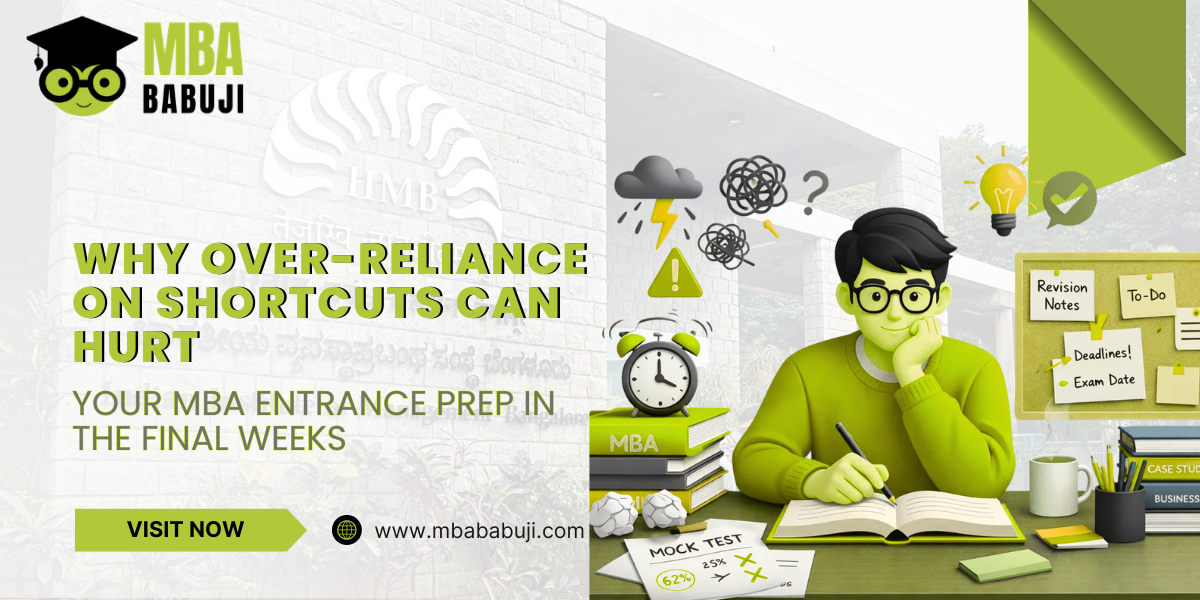
Why Over-Reliance on Shortcuts Can Hurt | Your MBA Entrance Prep in the Final Weeks
Introduction
The final weeks before your MBA entrance exams, whether it’s CAT, XAT, NMAT, or CMAT, are often the most stressful. Aspirants frequently resort to shortcuts—memorizing formulas, relying solely on mock tests, or focusing only on “high-yield” questions—to save time. While it may seem like an efficient strategy, over-reliance on shortcuts can backfire and hurt your overall performance.
In this article, we explore why shortcuts are risky, the psychology behind last-minute panic strategies, and how to optimize your preparation for maximum results in the final weeks.
The Hidden Risks of Shortcut-Based Preparation
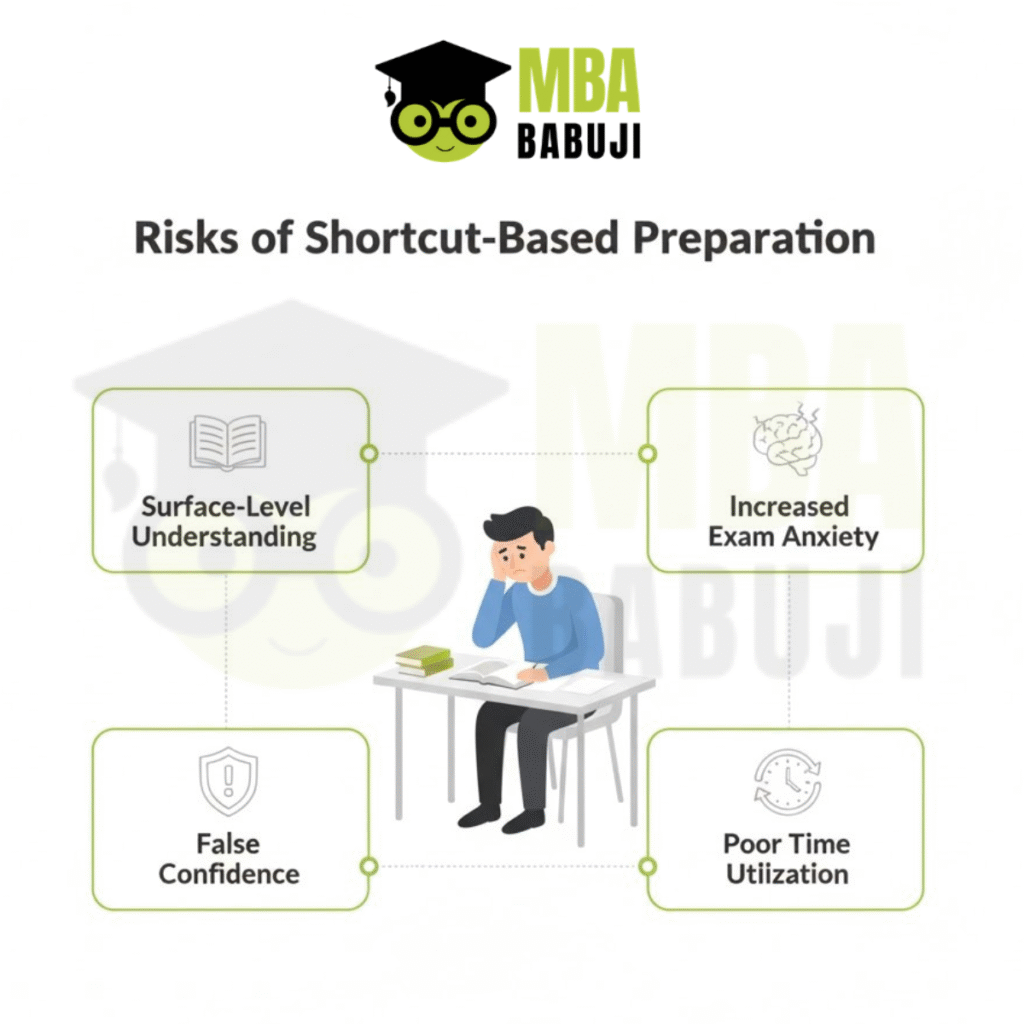
1. Surface-Level Understanding
Shortcuts often bypass deep conceptual clarity. While memorizing tricks or formulae can help solve certain problems quickly, it leaves you vulnerable when questions appear in a twisted or unconventional format, which is common in exams like CAT and XAT.
2. False Confidence
Relying on shortcuts can create an illusion of mastery. You might score well on practice questions initially but struggle under the exam’s pressure or when faced with unseen problem types.
3. Ineffective Time Management
Ironically, shortcuts meant to save time can waste it. Revising the wrong topics or re-learning forgotten shortcuts under pressure consumes energy and reduces time for more impactful preparation.
4. Increased Anxiety
Constantly hunting for new tricks increases mental clutter. Instead of focusing on strategy and conceptual clarity, aspirants often end up more stressed in the final weeks.
How to Optimize the Last Weeks Without Shortcuts
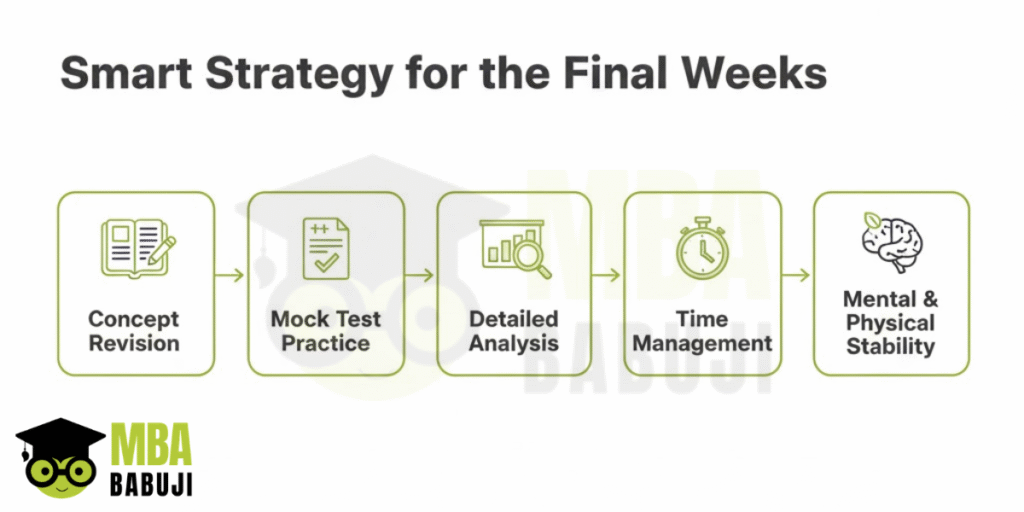
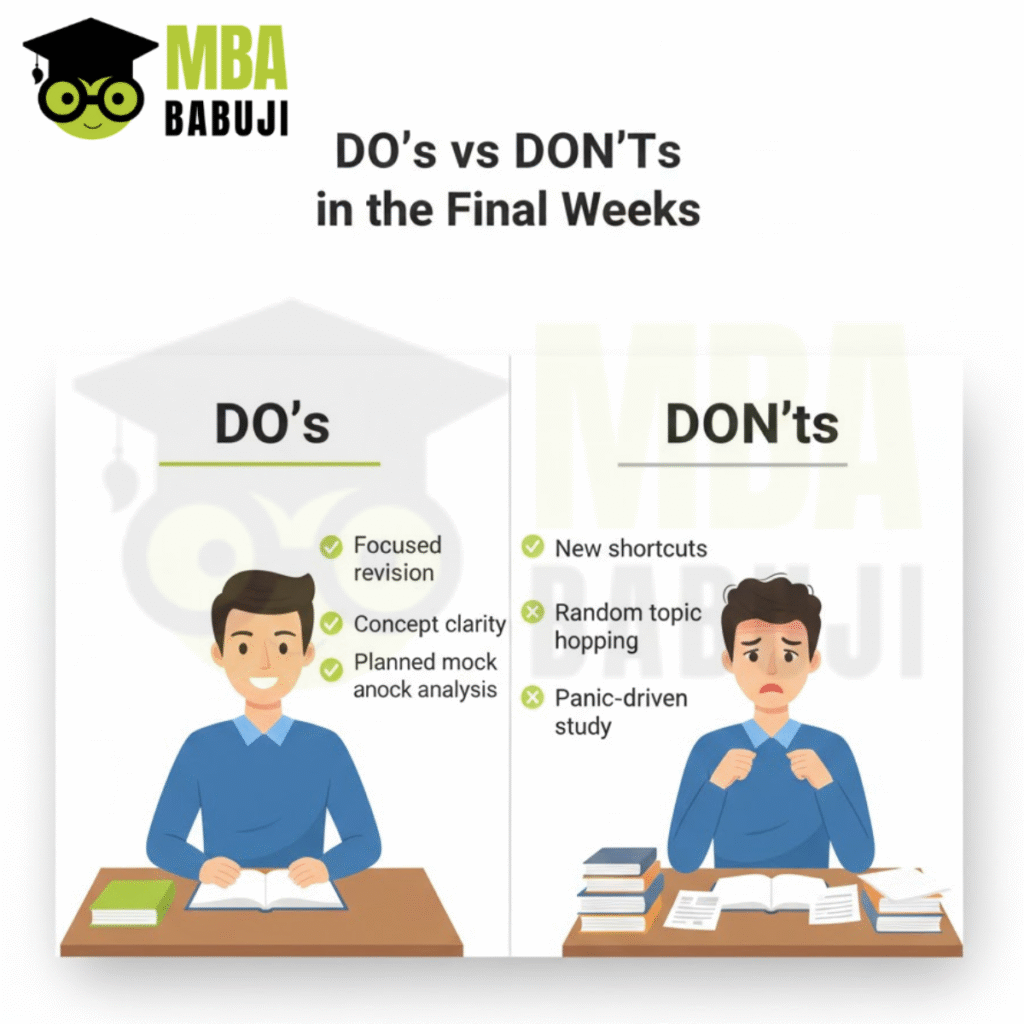
1. Focus on Revision, Not New Tricks
- Prioritize revising concepts and formulas you already know.
- Make a short, high-yield notes sheet for last-minute revision.
2. Smart Mock Test Strategy
- Don’t just take more mocks; analyze each carefully.
- Identify recurring mistakes and weak areas, and revise only those concepts.
3. Time Management Drills
- Practice sectional timing and full-length tests under exam conditions.
- Avoid learning shortcuts during these sessions; focus on accuracy and speed balance.
4. Conceptual Problem Practice
- Solve questions that challenge your conceptual understanding rather than memorized patterns.
- This ensures you’re prepared for twist questions and unseen formats.
5. Mental and Physical Health
- Shortcuts often neglect stress management.
- Ensure adequate sleep, light exercise, and stress-busting routines to maintain peak performance.
Quick Tips for Last-Minute Preparation
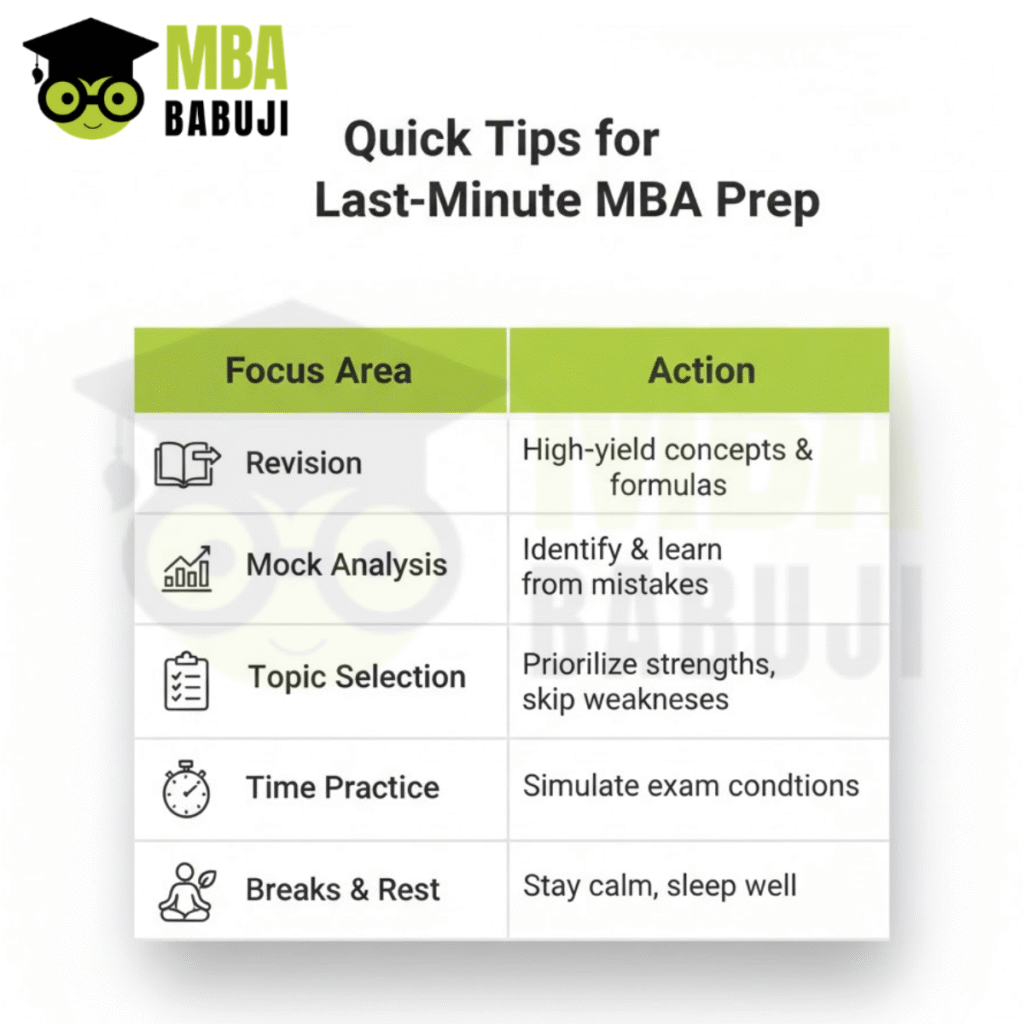
| Tip | Actionable Strategy |
|---|---|
| Prioritize Revision | Focus on concepts, formulas, and topics with the highest weightage. |
| Analyze Mocks | Identify mistakes, categorize them, and revise related concepts. |
| Avoid Overloading | Don’t try new tricks; stick to what you know works. |
| Manage Time | Practice speed with accuracy in each section. |
| Take Breaks | Short breaks help maintain mental clarity and reduce anxiety. |
Conclusion
In the final weeks before your MBA exams, quality matters more than quantity. Over-reliance on shortcuts can create false confidence, waste time, and increase stress. Instead, focus on revision, strategic mocks, and conceptual clarity. A disciplined, targeted approach in these last weeks can significantly improve your scores and give you the confidence to perform at your best on exam day.
FAQs
Q1. Can shortcuts be useful at all in the last weeks?
A: Yes, but only as reinforcement tools for concepts you already know. Avoid learning new shortcuts under pressure.
Q2. How many mocks should I take in the last 3–4 weeks?
A: Focus on 4–6 full-length mocks, emphasizing detailed analysis rather than sheer numbers.
Q3. Should I revise all subjects equally?
A: Prioritize your weak areas and high-weightage topics, but do a quick revision of other sections for confidence.
Q4. How to balance speed and accuracy in the last week?
A: Use timed practice sessions and analyze your accuracy vs. speed ratio to adjust your strategy section-wise.