How to Stay Calm During CAT Mocks Without Losing Speed: Exam Temperament, Pressure Handling & Test-Day Mindset
Introduction: Why CAT Mocks Feel Harder Than They Should
Many CAT aspirants notice something strange.
They can solve questions calmly during practice.
But the moment they start a mock test, everything changes:
- Reading speed drops in VARC
- DILR sets feel confusing
- Quant feels tougher than usual
- Small mistakes increase
- Panic makes you attempt wrong questions
After the mock, the same student often says:
“I knew this topic, but I messed up in pressure.”
This is not a syllabus problem.
This is an exam temperament problem.
CAT is a test of concepts, but it is also a test of how stable you stay under time pressure.
The good news is: calmness is not a personality trait.
It is a skill you can build.
Why Staying Calm Matters More Than You Think
CAT mocks are not only about knowledge. They reveal:
- How you react when you don’t know a question
- How quickly you recover after a mistake
- Whether you waste time on ego questions
- Whether you can skip without guilt
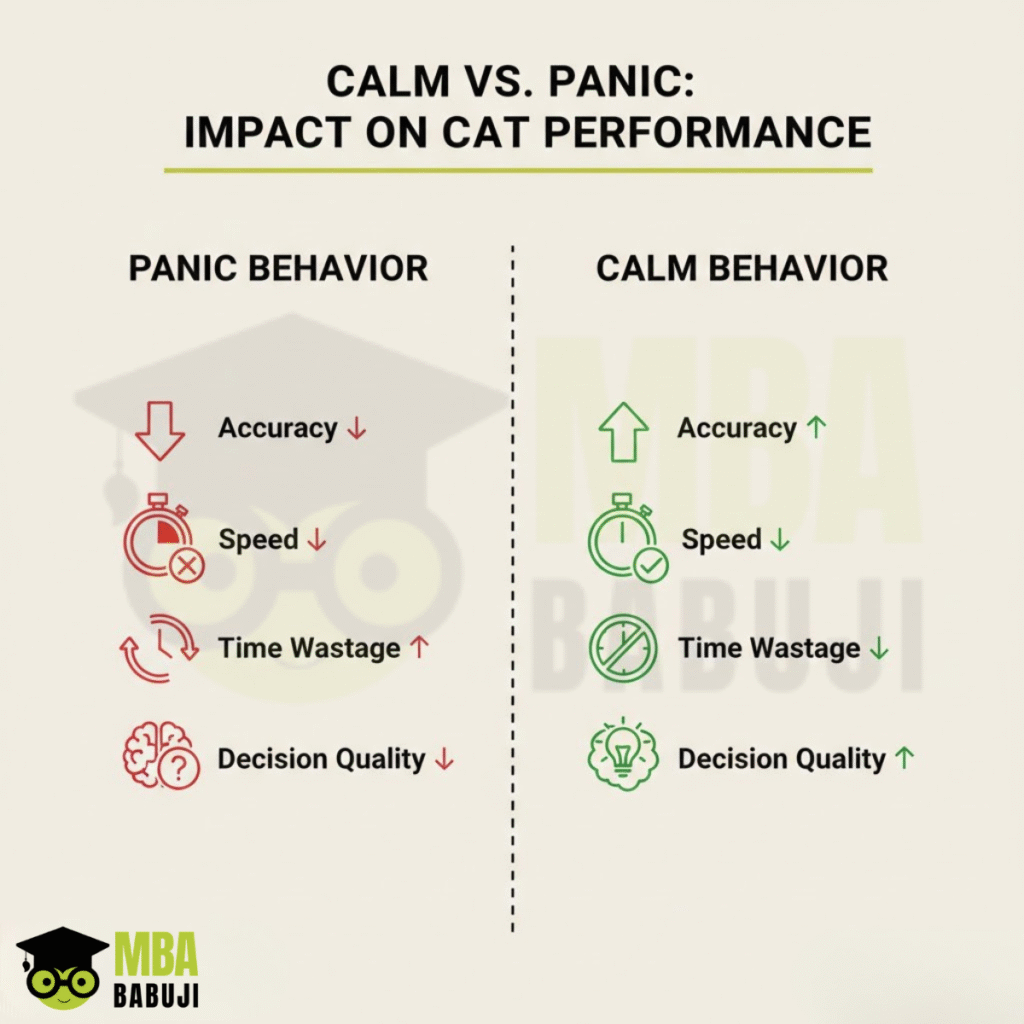
When you panic, you don’t just lose confidence — you lose:
- Accuracy
- Time
- Decision quality
And CAT is a decision-based exam.
The Biggest Myth: Calm Means Slow
Many aspirants fear:
“If I try to stay calm, I will lose speed.”
This is a misunderstanding.
In CAT mocks:
- Panic does not increase speed
- Panic increases wrong attempts and time wasted
Calmness improves:
- Reading clarity
- Question selection
- Accuracy
- Section control
In reality, calmness is what protects speed.
Why Aspirants Panic During CAT Mocks
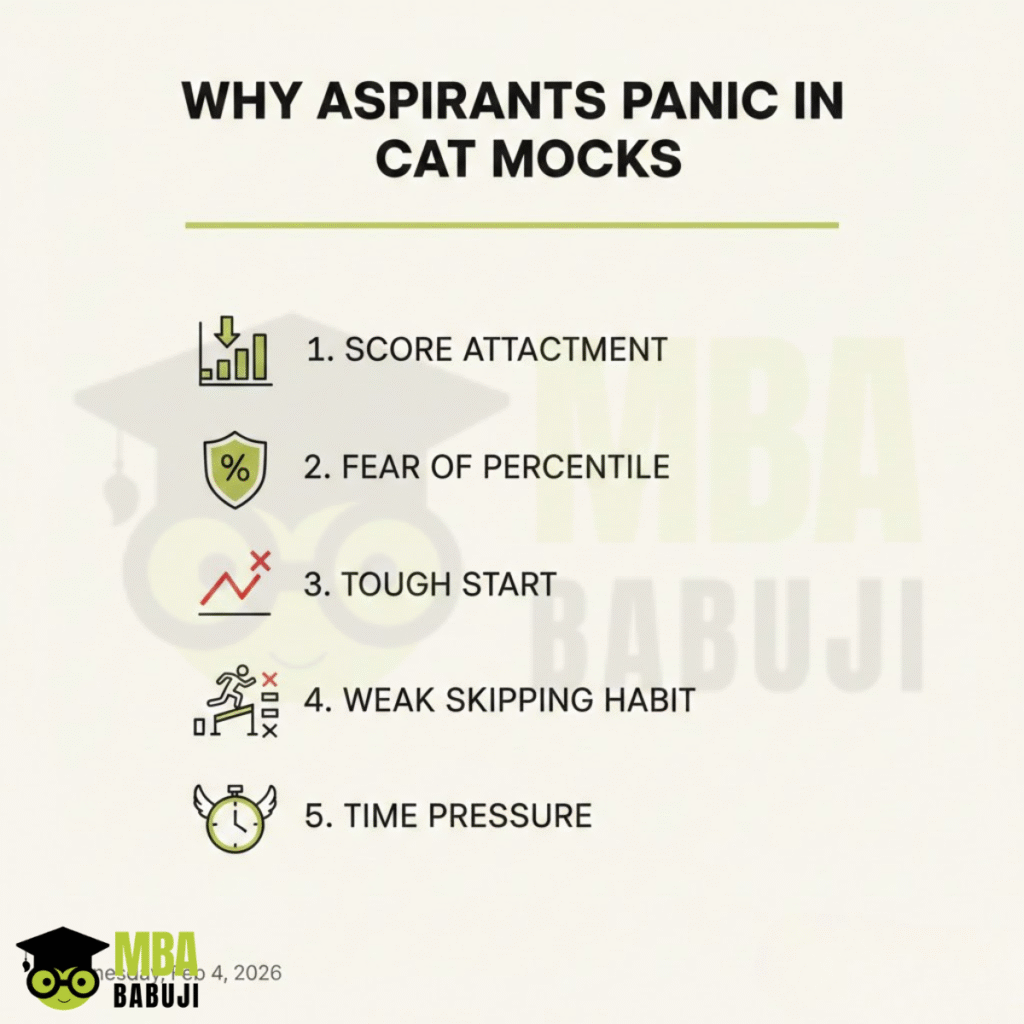
1. Mock Score Attachment
Many students treat every mock like the final CAT.
So a bad start feels like a disaster.
2. Fear of Losing Percentile
The moment you feel the mock is going badly, your mind starts calculating:
“My percentile will drop.”
This mental noise reduces performance further.
3. Over-Expectations
If you expect a perfect mock, any tough question triggers stress.
4. Weak Skipping Habit
Students who are not trained to skip feel stuck and frustrated.
How Panic Actually Destroys Performance
Let’s be realistic.
Panic causes:
- Misreading RC questions
- Rushing calculations
- Selecting the wrong DILR sets
- Spending 4–5 minutes on one question
- Guessing impulsively
- Losing the natural flow of the section
Even if your concepts are strong, panic can reduce your score by 15–30 marks in a mock.
The Real Skill: Emotional Control + Decision Control
CAT mock calmness is not about being emotionless.
It is about:
- Feeling pressure
- Yet continuing to make correct decisions
This is the difference between:
- A good student
- A good CAT performer
Practical Methods to Stay Calm Without Losing Speed
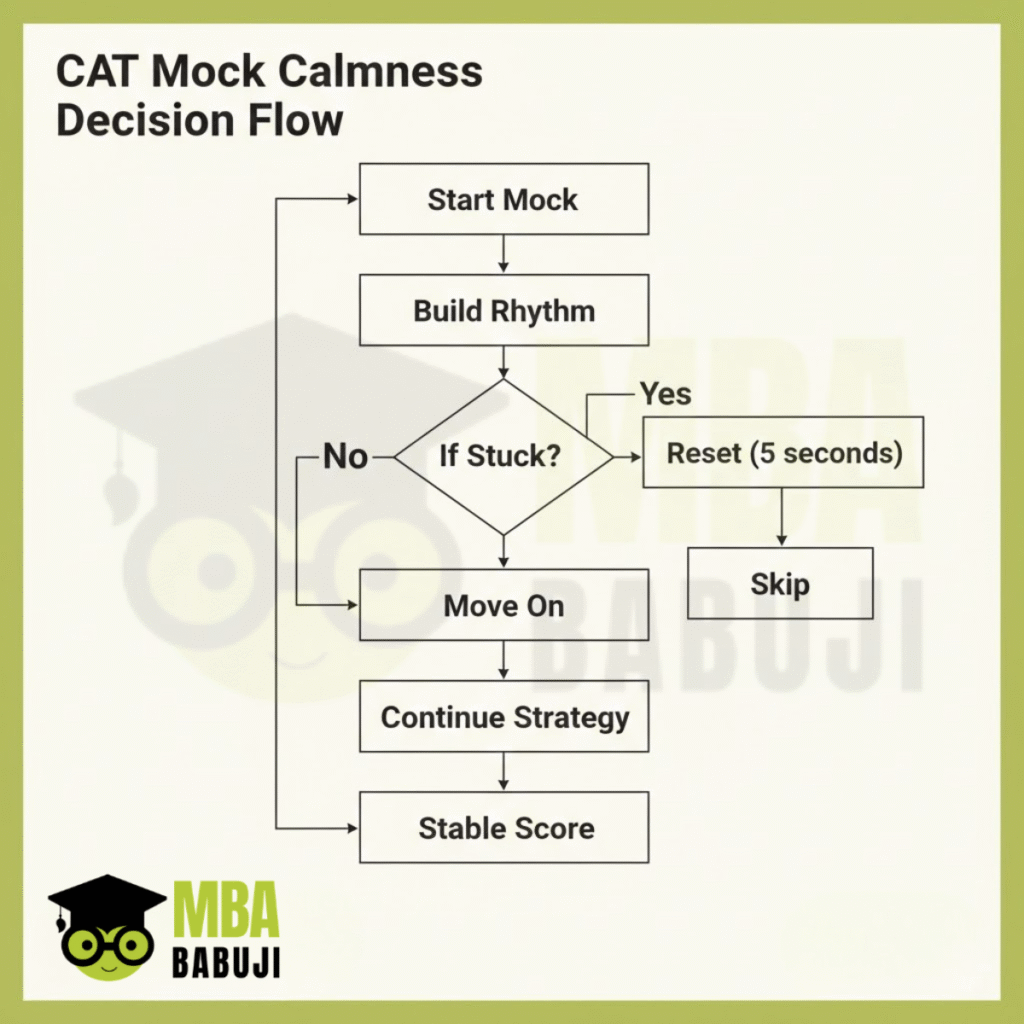
1. Start Every Mock With a “Warm Entry”
The first 3–4 minutes decide your mental state.
Instead of rushing, do this:
- Read first 2 questions carefully
- Avoid guesswork early
- Build rhythm
A stable start creates calmness naturally.
2. Use a “Reset Rule” After Every Wrong Feeling
Sometimes you feel:
“I’m stuck.”
At that moment, don’t fight. Reset.
Reset rule:
- Stop for 5 seconds
- Take one deep breath
- Move to next question
This is not wasting time.
This saves minutes.
3. Practice Skipping Like a Skill
Most panic happens because aspirants try to solve everything.
A calm CAT performer is a good skipper.
Train yourself:
- Skip within 30–40 seconds if no direction
- Mark and move
- Come back only if time remains
Skipping is not giving up.
Skipping is strategy.
4. Reduce Mock Pressure by Changing the Goal
Your goal in mocks should not be:
❌ “I must score high.”
It should be:
✅ “I must execute my strategy correctly.”
Even if the score is low, if execution improves, your CAT score will improve later.
5. Build a Section-Wise Calm Strategy
VARC
- Don’t chase tough RC questions
- Focus on accuracy first
- Don’t reread paragraphs emotionally
DILR
- Calm comes from set selection
- Don’t spend 10 minutes proving a set is hard
- Move quickly if no entry point
Quant
- Don’t solve for ego
- Choose questions that match your strength
- Avoid time traps early
What Toppers Do When a Mock Goes Bad
This is important.
Even toppers face:
- Bad VARC days
- Tough DILR sets
- Unexpected quant questions
Their difference is:
- They don’t emotionally collapse
- They don’t “revenge attempt”
- They continue making smart decisions
They treat the mock like a business situation:
“This section is tough. Let’s minimize loss and maximize gain.”
That is real CAT temperament.
The “Mock Temperament” Routine You Should Follow
After every mock, review:
- 3 panic moments
- 3 time-waste moments
- 3 wrong decisions
- 3 good decisions
This trains your brain to become stable over time.
Conclusion: Calmness Is a Competitive Advantage in CAT
CAT is not a test where the smartest student always wins.
It is a test where the most stable performer wins.
If you can stay calm during mocks:
- Your speed improves naturally
- Your accuracy increases
- Your decisions become sharper
- Your scores become consistent
So don’t only practice questions.
Practice control.
Because in CAT, control is the score.
FAQs
1. Why do I panic during CAT mocks even when I know concepts?
Because mocks create time pressure, score attachment, and fear. Panic is usually a temperament issue, not a syllabus issue.
2. How can I stay calm in DILR mocks?
By improving set selection and learning to skip quickly. Calmness in DILR comes from choosing the right sets, not solving more sets.
3. Does staying calm reduce speed in CAT?
No. Panic reduces speed by causing confusion and wrong attempts. Calmness improves reading clarity and decision-making, which protects speed.
4. How long does it take to build a mock temperament?
Most aspirants see improvement within 3–5 weeks of consistent mock practice + analysis of panic patterns.