
Why Good Mock Scores Fail: The CAT & XAT Percentile Gap Explained
Many MBA aspirants feel confident after scoring well in mock tests, only to face disappointment on the actual CAT or XAT exam day. This gap between mock performance and real percentile is one of the most common — and least understood — problems in MBA entrance preparation.
Good mock scores do not automatically translate into high percentiles. The reason lies not in intelligence or effort, but in how mocks are used, interpreted, and mentally approached.
This article breaks down the real reasons behind this mismatch and explains what toppers do differently.
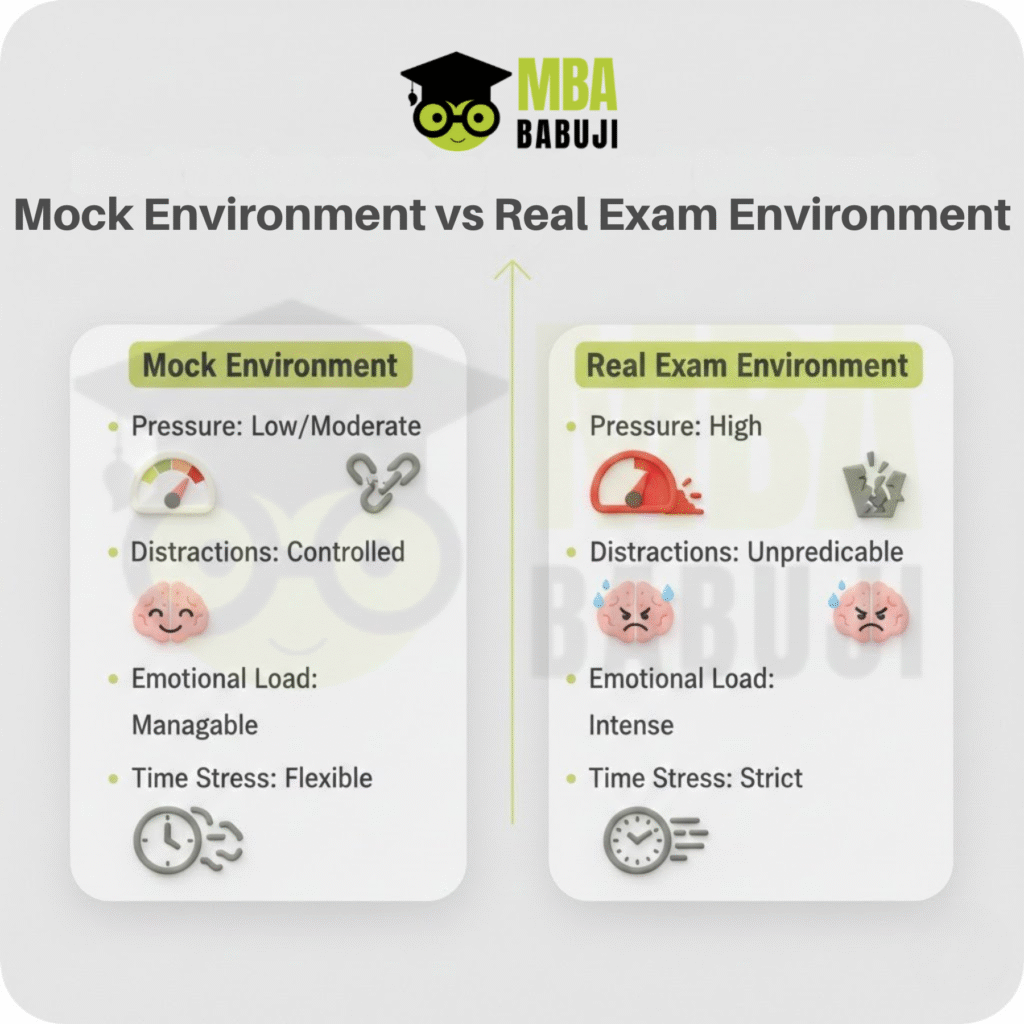
1. Mock Scores Measure Comfort, Not Pressure Handling
Mock tests are usually taken:
- At home
- In familiar environments
- With flexible breaks and mental comfort
The actual exam is taken under:
- High psychological pressure
- Strict time discipline
- Uncertainty and fear of cut-offs
Many students perform well in mocks because they are comfortable, not because they are exam-ready.
👉 Key Insight:
Mocks test preparation level.
The real exam tests decision-making under pressure.
2. Students Chase Scores Instead of Decisions
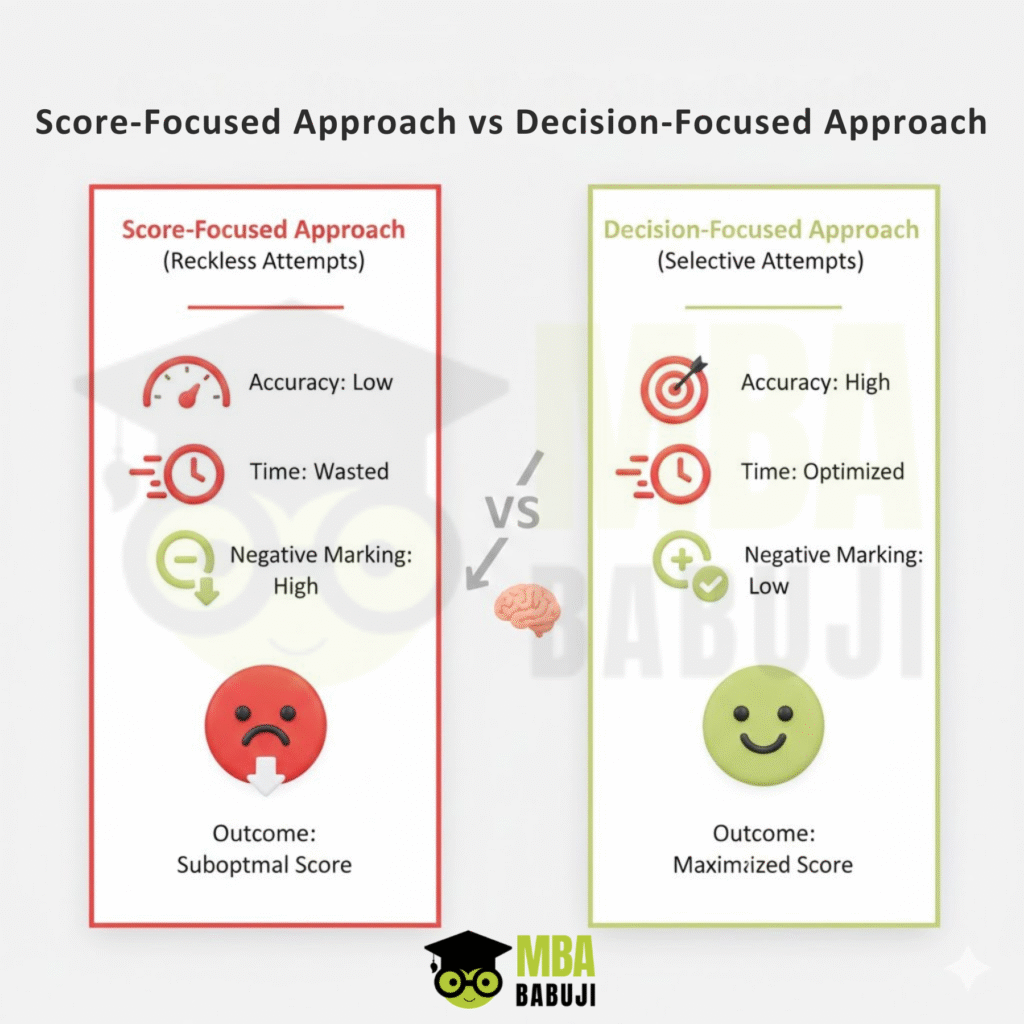
A common mistake is focusing on:
- Total mock score
- Percentile shown by the test platform
Instead of analyzing:
- Which questions were wrongly attempted
- Where time was wasted
- Which sections caused panic
In CAT and XAT, one bad decision can destroy overall accuracy.
Toppers don’t aim to “attempt more”.
They aim to attempt better.
3. Mock Difficulty ≠ Exam Difficulty
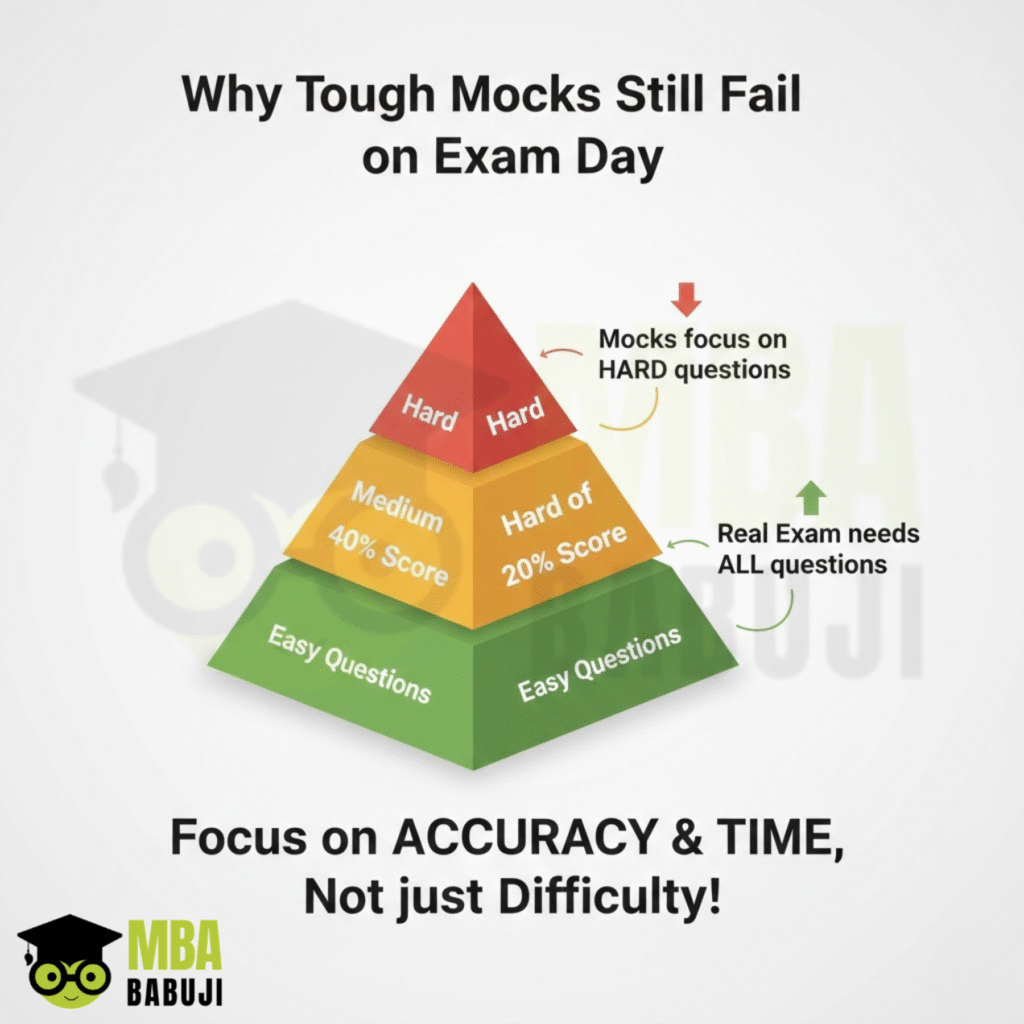
Mock test providers often:
- Increase difficulty to “prepare for worst case”
- Inflate complexity to appear premium
As a result:
- Students adapt to solving tough questions
- They ignore easy and medium questions under time pressure
In the real exam:
- Easy questions decide cut-offs
- Speed and selection matter more than difficulty tolerance
4. Poor Mock Analysis Is the Silent Killer
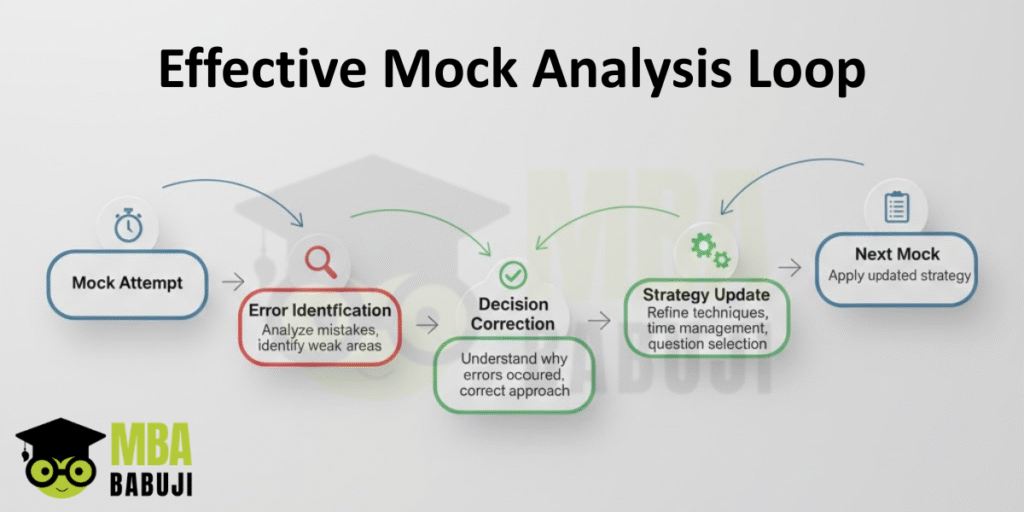
Most students:
- Take a mock
- Check score and percentile
- Move on to the next mock
Toppers:
- Spend 2–3 hours on analysis
- Identify repeat mistakes
- Track question-level decision errors
Without analysis, mocks become practice tests, not improvement tools.
5. Sectional Strategy Breaks Under Pressure
Many students:
- Have a plan for mocks
- Abandon it during the real exam
Common issues:
- Overspending time in Quant
- Rushing VARC
- Guessing in Decision Making (XAT)
Mocks don’t expose this unless section-wise time discipline is tracked strictly.
6. Percentile Depends on Relative Performance, Not Raw Marks
CAT and XAT are relative exams.
Even if your marks stay similar:
- Your percentile drops if others manage pressure better
- One wrong section can pull down the entire score
Mock percentiles are predictive, not definitive.
What Toppers Do Differently
They use mocks to:
- Practice skipping questions
- Improve accuracy under stress
- Lock section-wise time limits
- Train emotional control
Mocks are not confidence boosters for them —
They are decision-training tools.
Conclusion
If your mock scores are good but percentiles don’t convert on exam day, the problem is not your preparation.
The real issue is:
- Decision-making under pressure
- Poor analysis habits
- Score-focused mock usage
Fix these, and your mock performance will finally reflect in the CAT and XAT percentiles.
FAQs
Q1. Are mock tests reliable indicators of CAT/XAT performance?
Mocks indicate preparation level, not final percentile. Real exams test pressure handling.
Q2. How many mocks should be taken before CAT or XAT?
Quality matters more than quantity. Fewer mock tests with in-depth analysis are more effective.
Q3. Why do some students score lower in the actual exam than in the mocks?
Due to stress, poor decisions, and abandoning the strategy under pressure.
Q4. Should I stop taking difficult mocks?
No, but treat them as learning tools, not performance benchmarks.