Why Being Good at Math Is Not Enough: What MBA Entrance Exams Really Test
Many MBA aspirants believe one thing with full confidence:
“If my Maths is strong, I’ll crack MBA entrance exams.”
This belief sounds logical.
It is also incomplete — and often harmful.
Because MBA entrance exams don’t reward mathematical ability alone.
They reward how, when, and whether you use it.
Math Is Necessary — But Not Decisive
Yes, Quantitative Aptitude matters.
No one is denying that.
But CAT, XAT, CET, NMAT, and SNAP are not math olympiads.
They are decision-based exams, where:
- Accuracy matters more than difficulty
- Time matters more than elegance
- Judgment matters more than speed
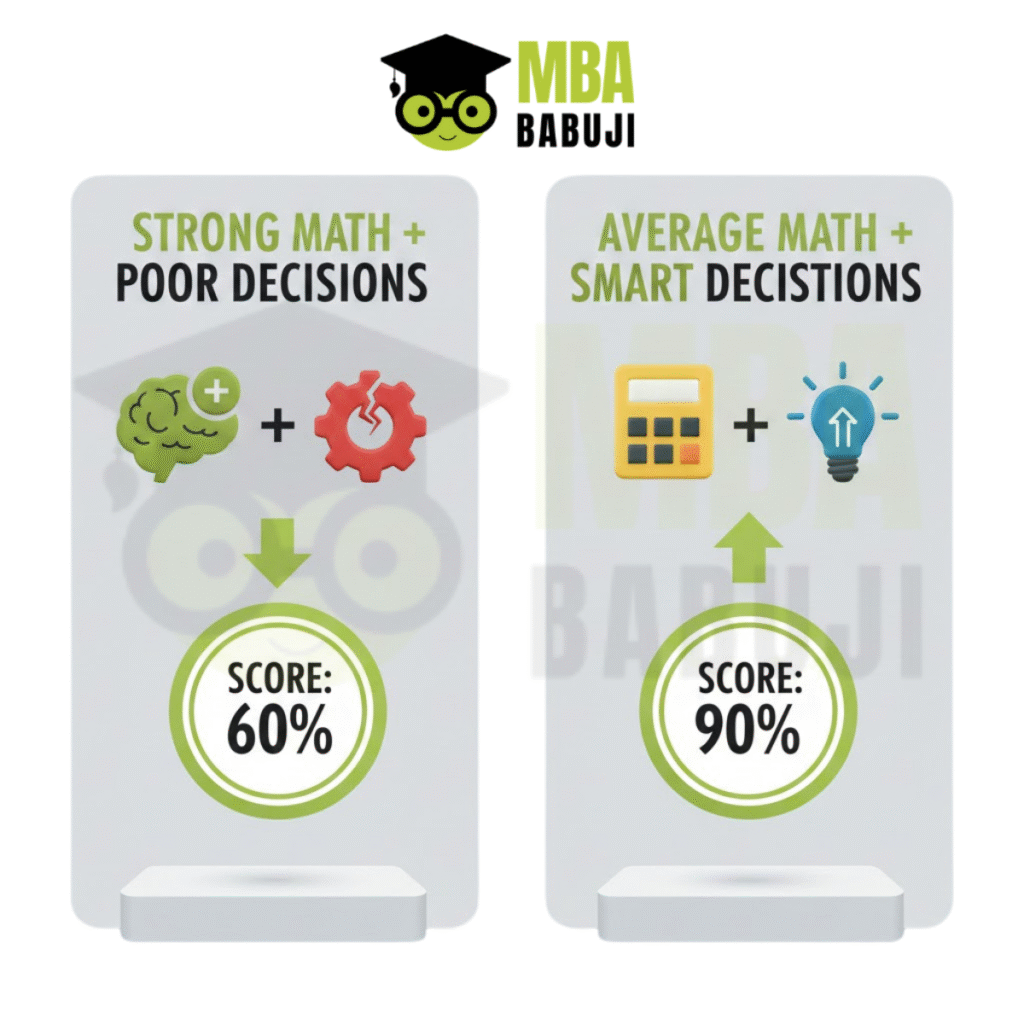
Many strong math students underperform — not because they can’t solve, but because they solve the wrong questions at the wrong time.
Where Good Math Students Go Wrong
1. They Try to Solve Everything
Strong math students feel uncomfortable skipping Quant questions.
They think:
- “This is solvable”
- “I should be able to do this”
But solvable does not mean worth attempting.
MBA exams punish unnecessary attempts, no matter how strong your math is.
2. They Overestimate Speed Advantage
Good math skills don’t guarantee fast execution under pressure.
Long calculations, tricky approximations, or hidden traps can:
- Consume time
- Break rhythm
- Reduce accuracy
A slower but selective student often scores higher than a fast but reckless one.
3. They Ignore Risk-Reward Logic
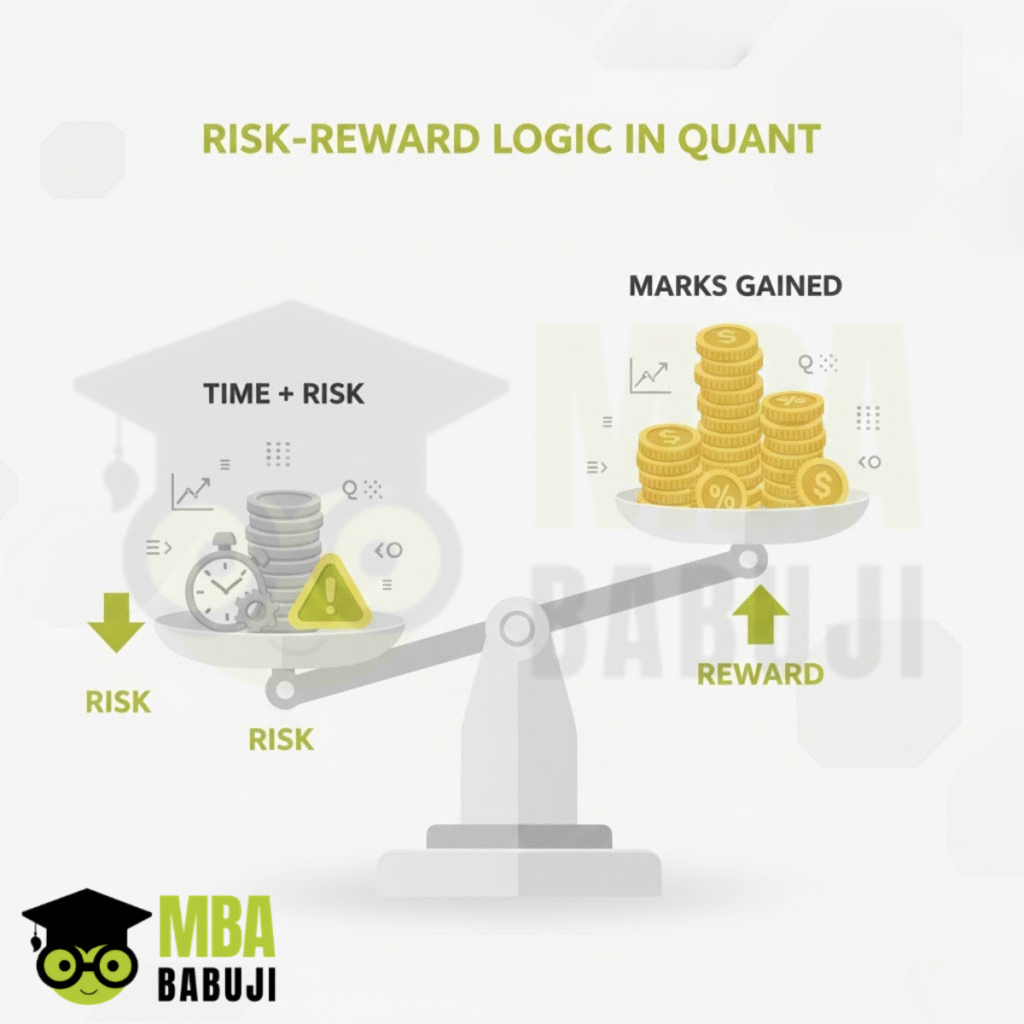
Every question has a cost:
- Time spent
- Probability of error
- Opportunity loss
Math-focused aspirants often see only the solution path — not the risk profile.
MBA exams are about risk management, not brute force.
MBA Exams Test Decision Quality, Not Calculation Skill
Ask yourself honestly:
Are you being tested on:
- How difficult the question is? ❌
- Or whether attempting it makes sense? ✅
This is why:
- Many 99+ percentilers leave doable questions
- Many average scorers attempt too many
The difference is not intelligence.
It is judgment under time pressure.
Accuracy Beats Intelligence in MBA Exams
In MBA entrances:
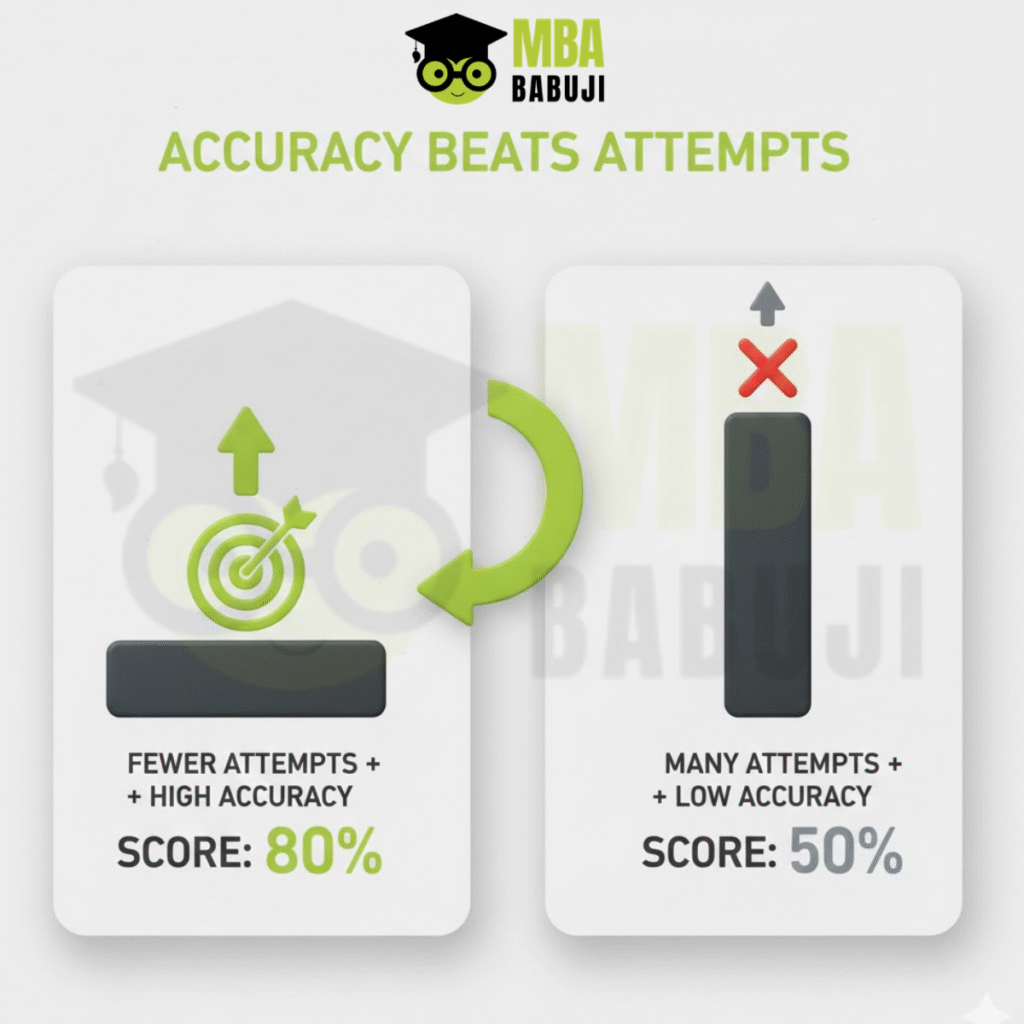
- 1 wrong attempt can cancel 3–4 correct ones
- High accuracy creates percentile jumps
- Over-attempting kills scores silently
Good math students often lose marks not due to lack of knowledge, but due to overconfidence.
Why Non-Math Students Sometimes Score Better
Non-math students:
- Respect difficulty
- Avoid long calculations
- Focus on certainty
They may solve fewer questions, but:
- With higher accuracy
- Better time distribution
- Lower panic
MBA exams reward this restraint.
What Toppers Do Differently
MBA toppers with strong math backgrounds still:
- Skip lengthy calculations
- Avoid low-clarity questions
- Protect accuracy over ego
They don’t ask:
“Can I solve this?”
They ask:
“Should I solve this?”
That single question changes everything.
How to Use Your Math Strength Correctly
Step 1: Categorise Questions
In mocks, label Quant questions as:
- Safe
- Risky
- Time traps
Your math skill should be used selectively, not blindly.
Step 2: Set Time Limits
Decide:
- Max time per question
- When to abandon
Strong math + weak exit control = low score.
Step 3: Track Wrong Attempts
Analyse:
- Which wrong answers came from overconfidence
- Which attempts were unnecessary
Patterns repeat — fix them.
Final Takeaway
Being good at Math is an advantage.
Treating it as a guarantee is a mistake.
MBA entrance exams don’t reward who can solve the hardest question.
They reward who can:
- Choose wisely
- Control risk
- Protect accuracy
If you combine math skill with decision discipline, your score will rise.
Without that discipline, math alone is not enough.