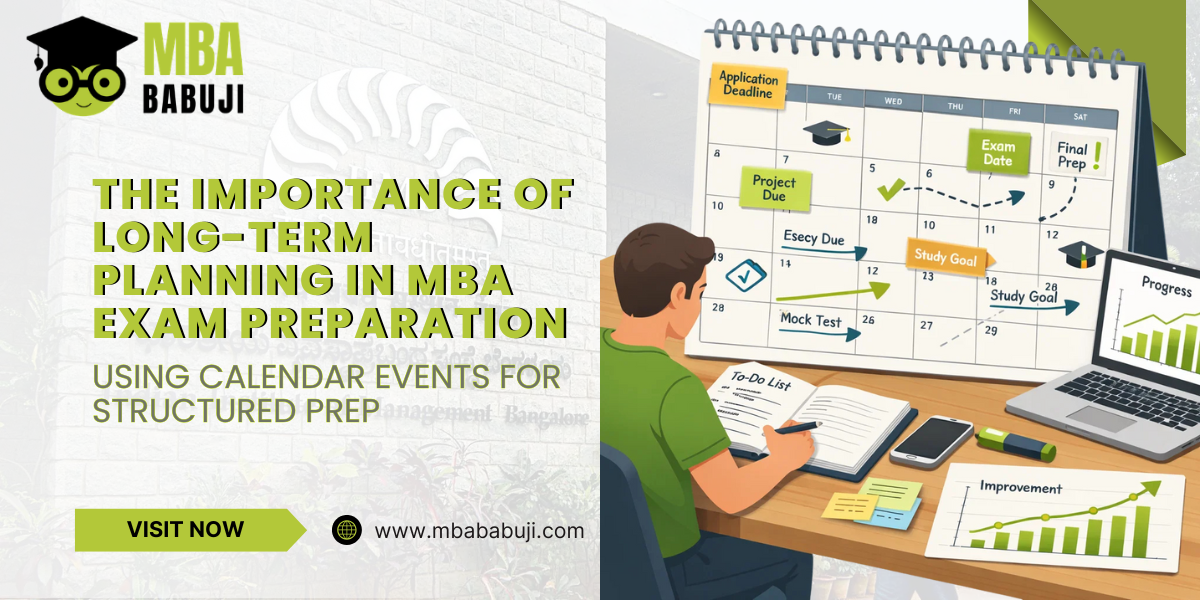
The Importance of Long-Term Planning in MBA Exam Preparation: Using Calendar Events for Structured Prep
Introduction: Why Long-Term Planning Matters
MBA entrance exams like CAT, XAT, CET, NMAT, and SNAP are not won by last-minute efforts. Many aspirants study hard daily but fail to see meaningful progress. The difference between consistent score growth and stagnation often comes down to long-term planning.
Structured preparation doesn’t mean rigid routines alone. It means aligning daily practice, mock tests, and revision cycles with broader milestones, such as national events, exam notifications, or current affairs timelines. Calendar-based planning helps aspirants track progress, avoid rushed preparation, and maximize efficiency.
Why Most Aspirants Struggle Without Long-Term Planning
Many students focus only on immediate tasks:
- Solving a fixed number of questions per day
- Watching concept videos without review
- Attempting random mocks sporadically
While these seem productive, they often ignore the bigger picture. Without long-term planning:
- Weak areas remain unaddressed until late
- Revision becomes rushed or incomplete
- Mock analysis is irregular
- Stress spikes closer to exams
Calendar-driven milestones help aspirants pace themselves while ensuring both coverage and improvement.
How Calendar Events Can Shape Your Preparation
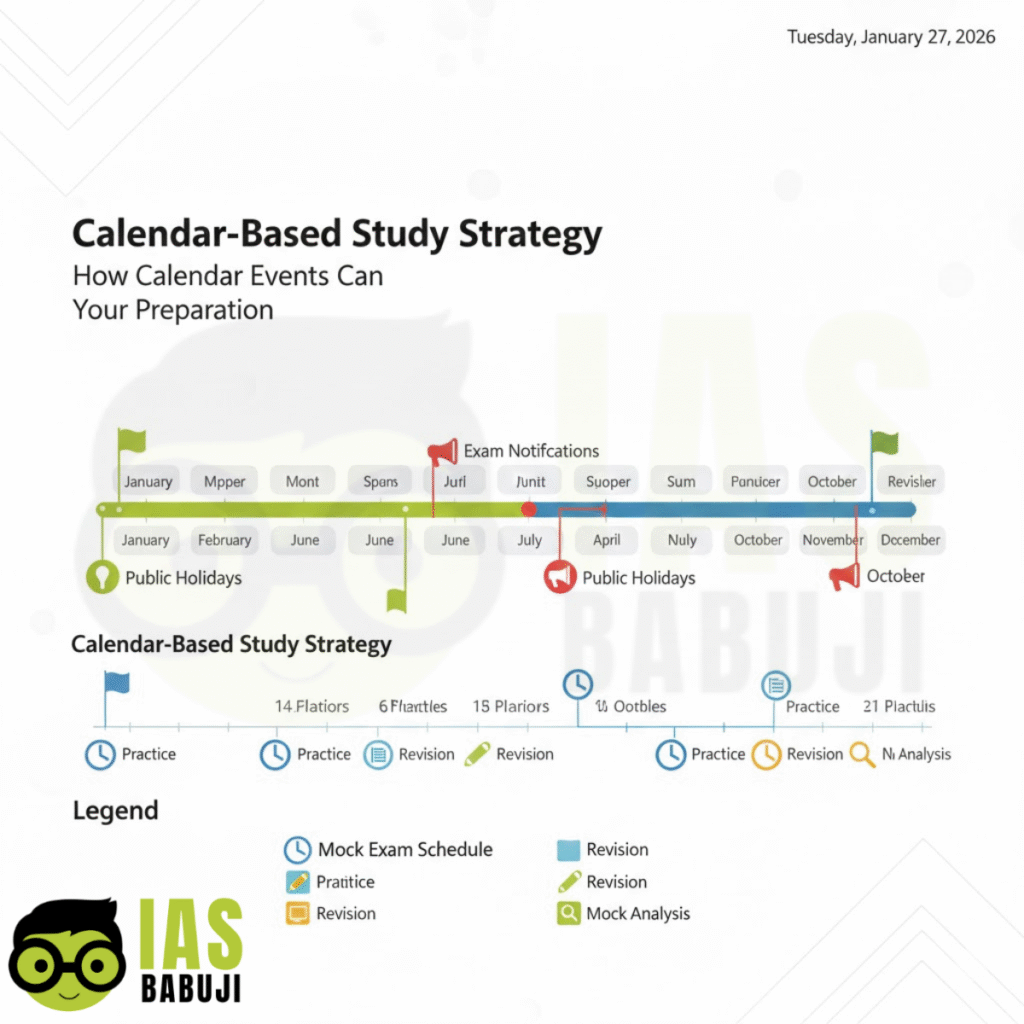
1. National and Current Affairs Events
Events like Republic Day, Budget announcements, or global economic updates can serve as:
- Revision checkpoints: Use these events to review GK and current affairs
- Mock themes: Incorporate event-based questions in practice
- Analytical exercises: Develop insights on policy or economic impact, improving comprehension and decision-making
2. Exam Notifications and Deadlines
Align your long-term plan with official exam dates:
- Back-calculate preparation milestones from exam day
- Schedule sectional focus periods (Quant, LRDI, Verbal)
- Ensure sufficient time for mocks and analysis
3. Mock Test Calendar
Treat each mock as a strategic milestone:
- Schedule weekly/monthly mocks aligned with progress
- Include pre-defined review sessions
- Use mock outcomes to adjust the upcoming plan
Components of an Effective Long-Term Plan
1. Define Your Goal
- Target percentile and B-school
- Strengths and weaknesses identified
- Subject-wise targets for each month
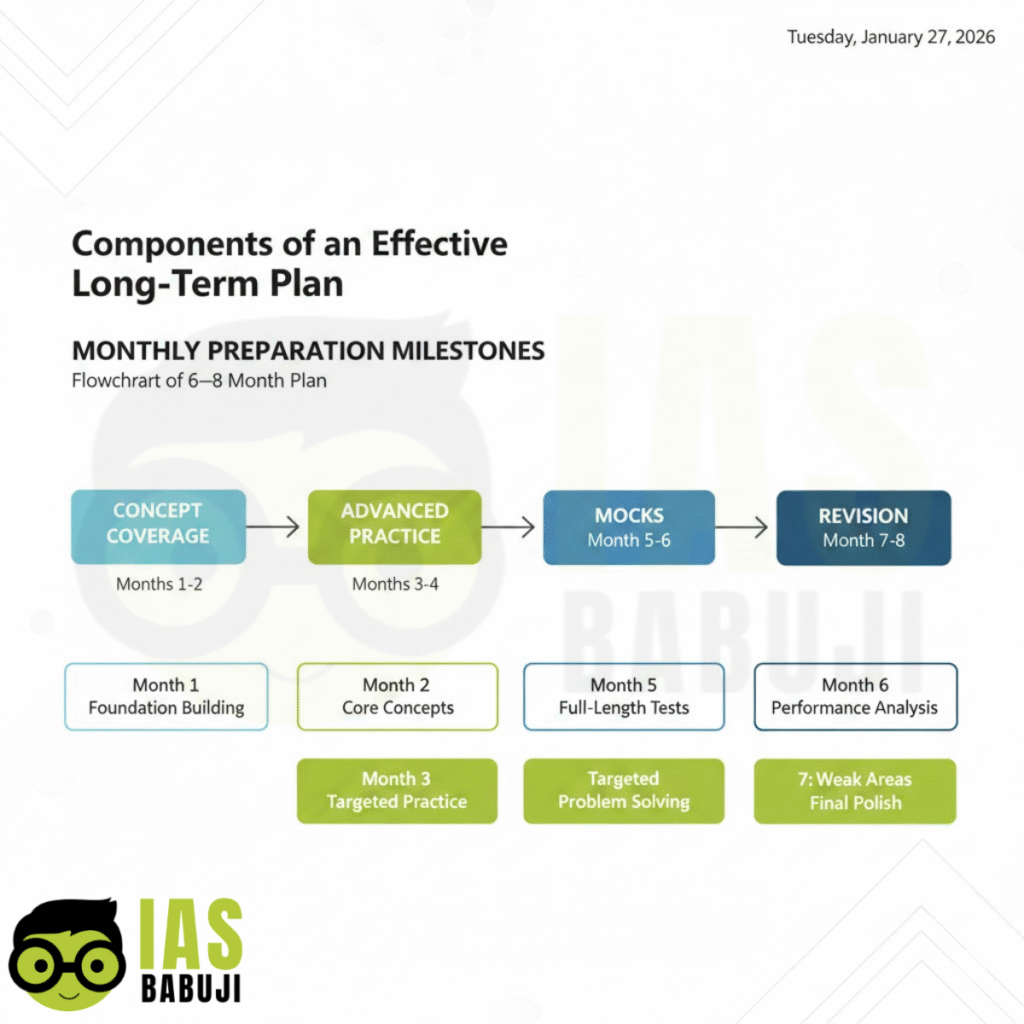
2. Break the Goal Into Monthly/Weekly Milestones
- Month 1–2: Concept coverage and basic practice
- Month 3–4: Advanced practice and sectional focus
- Month 5: Timed full-length mocks and iterative improvement
3. Integrate Revision and Analysis
- Allocate time for weekly revision of all attempted questions
- Maintain a mistake log for repeated errors
- Track improvement in accuracy and speed
4. Include Calendar-Based Checkpoints
- Use national events or current affairs updates as review triggers
- Track completion of syllabus and mock cycles against calendar dates
Benefits of Long-Term Planning for MBA Aspirants
- Steady Score Growth: Prevents last-minute panic and inconsistent performance
- Focused Effort: Directs energy to weak areas and high-yield topics
- Better Time Management: Balances practice, revision, and mocks efficiently
- Exam Readiness: Ensures both concept clarity and test-taking strategy are strong
- Stress Reduction: Clear milestones reduce anxiety and confusion
Practical Tips to Implement Calendar-Based Planning
- Create a Master Calendar: Include exam dates, national events, mock schedules, and revision cycles.
- Set Weekly Targets: Cover specific topics and allocate time for mock analysis.
- Link Current Affairs to Mocks: Use recent events to develop GK insights and application practice.
- Adjust Monthly: Based on mock results, tweak focus areas without disturbing overall plan.
- Review Progress Every Month: Compare planned vs achieved milestones and optimize the next month.
Conclusion: Planning Is the Key to Strategic Preparation
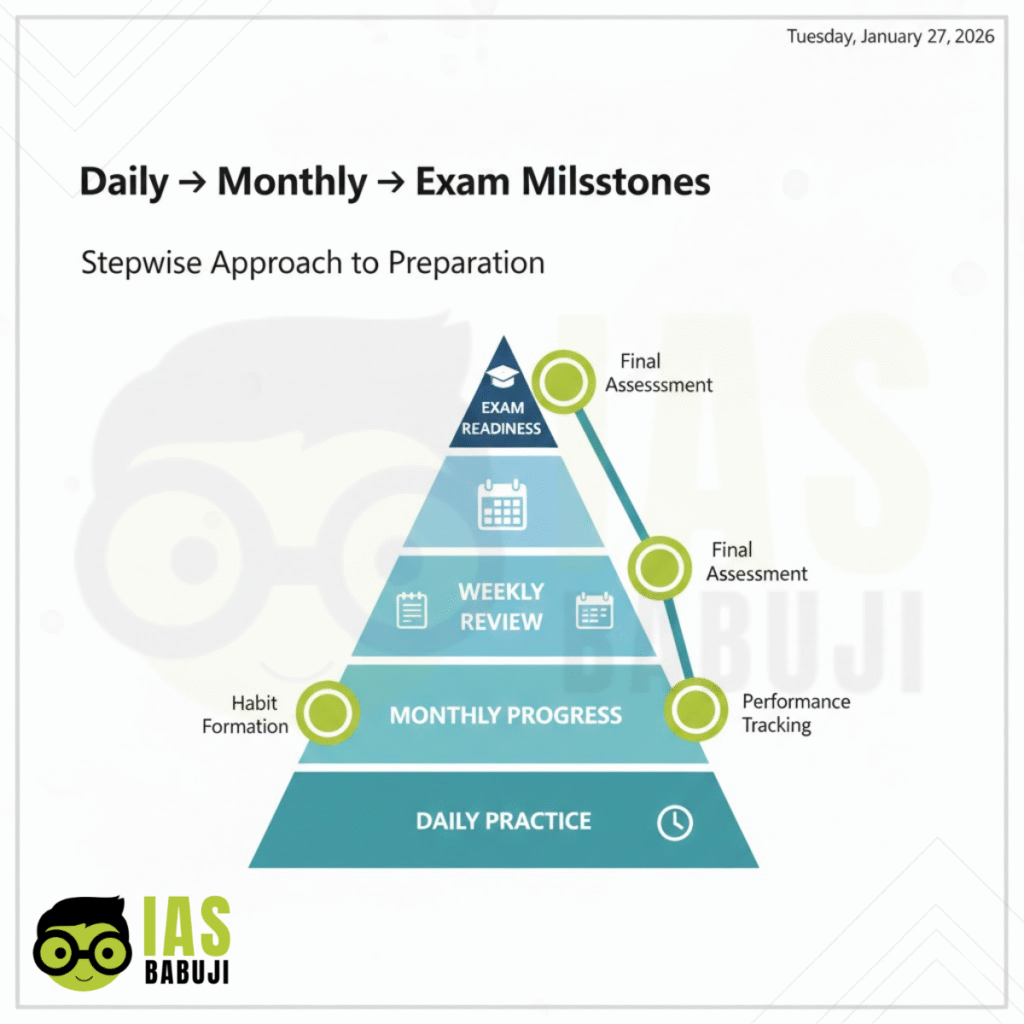
Long-term planning is not about rigid schedules or overloading yourself. It’s about aligning daily efforts with monthly, quarterly, and exam-oriented milestones. Using calendar events as natural checkpoints adds structure, keeps preparation relevant, and ensures continuous progress.
MBA aspirants who combine structured long-term planning with focused daily action consistently outperform peers who rely on short-term bursts or random effort. Remember: preparation is a marathon, not a sprint — and every milestone counts.
FAQs
1. How far in advance should I start planning for MBA entrance exams?
Ideally 8–12 months before the exam. Long-term planning allows structured syllabus coverage, iterative improvement, and timely revision.
2. Can national events and current affairs really impact preparation?
Yes. They provide context for GK, improve analytical thinking, and help simulate real-life decision-making scenarios.
3. How often should I adjust my plan?
Monthly reviews are ideal. Use mock test results and missed targets to adjust focus areas and revision cycles.
4. How do I balance long-term milestones with daily study?
Break monthly goals into weekly and daily targets. Daily practice should feed into broader milestones while leaving space for review and mocks.